TRIBUTE: The Greatest Story in Sports: A Tribute to Alex Zanardi (1966-2026)
by Ben Schneider / LASTCAR.info Staff Writer
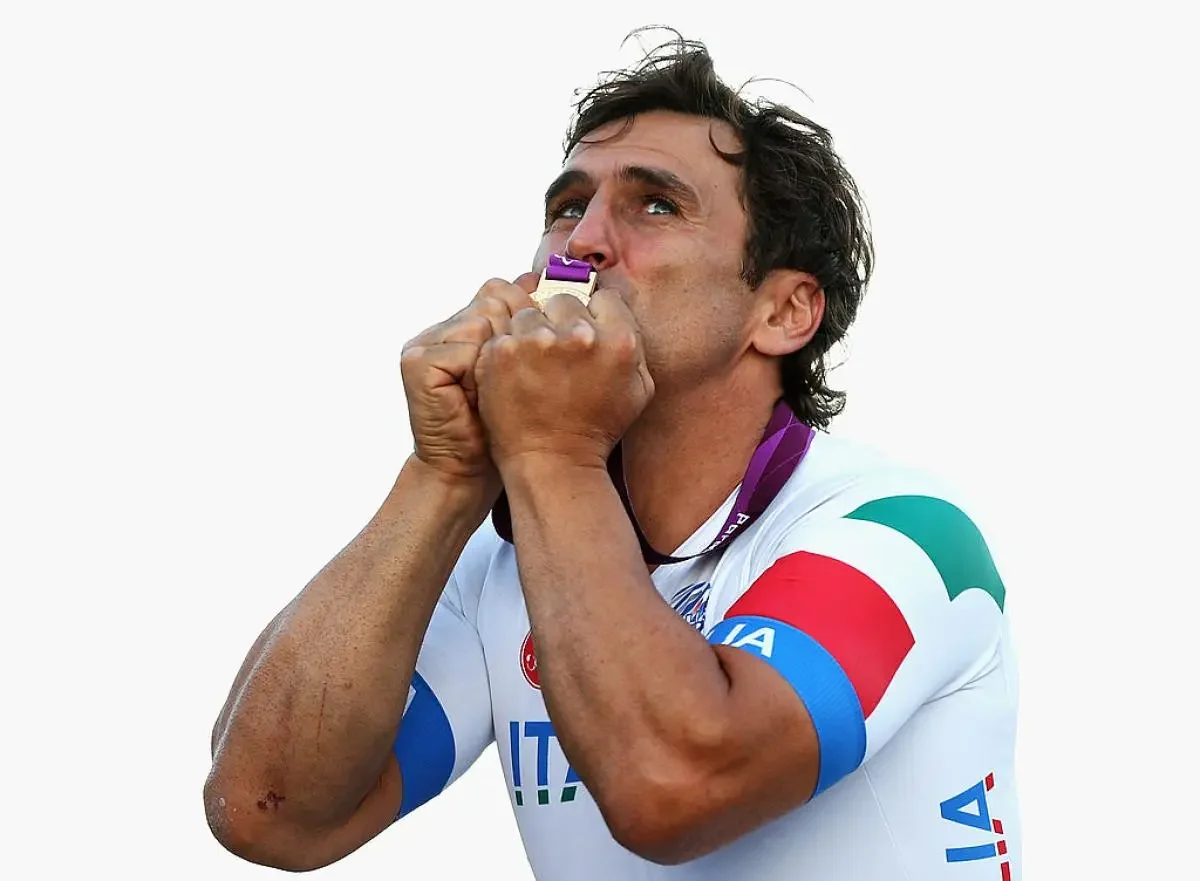
On September 14, 2016, Alessandro Zanardi picked up right where he left off in London four years earlier by winning a gold medal in the 2016 Summer Paralympics in Rio de Janeiro, taking victory in the 20 km men’s time trial H5 road cycling event. It was the third gold medal of the IndyCar champion-turned-handcyclist’s Paralympic career, earned just one day before the 15th anniversary of the crash that claimed his legs, but not his life, and certainly not his competitive spirit.
Zanardi would go on to win another gold and a silver medal at the 2016 Games, replicating his 2012 London performance for a total of six Paralympic medals, four of which were gold.
In a tweet posted after the Italian won his first of three medals in Rio, ESPN motorsports writer Ryan McGee called Zanardi “my favorite sports story. Ever.”
I could not agree more. In fact, I would go so far as to say Zanardi’s story is the greatest in all of sports history, period.
To be fair, I am only 26 years old. I had just turned two when Zanardi lost his legs in that devastating crash at the Lausitzring in Germany on September 15, 2001. I’m sure plenty of sports fans with more life experience might have moments that they would choose for that distinction, instead. Even here, most of my memories of him are those of the Paralympics rather than his motor racing career.
I should also admit up front that I am biased. Zanardi is my all-time favorite athlete.
But I still find myself hard-pressed to think of any sports story that rivals this one.
Zanardi’s comeback is, objectively, one that should not have been possible. When his car was struck and split in half by that of Alex Tagliani (who, to be clear, no one should hold accountable in any way for an accident that was entirely unavoidable) with 13 laps to go, his legs were traumatically amputated. As Dr. Steve Olvey recalls, his medical partner, Dr. Terry Trammell, simply radioed to him, “Both legs are gone.” Zanardi was bleeding out, ultimately losing nearly 75% of his blood volume.
On Page 25 of the 2011 paperback edition of his memoir, Olvey writes, “Alex’s injury was considered to be 100% fatal when it occurred in the field. No one, to our knowledge, had ever survived this injury. . .death would usually occur in less than four minutes.”
Life-saving work from Olvey, Trammell, and many others, both on that day and in the days that followed, prevented that from happening.
Incredibly, Zanardi not only survived the accident, but he returned to the Lausitzring less than two years later to run 13 laps in an Indy car with modified hand controls. While the gesture to let Zanardi “finish” his 2001 race may have appeared ceremonial, his lap times were anything but. His fastest lap of 37.487 seconds would have qualified fifth for CART’s 2003 race at the track.
While Zanardi continued to compete in racing, both with prosthetics and hand controls, he became best known in his later years for a second career in sports when he took up handcycling in 2007. Zanardi finished fourth at the New York City Marathon that year, then won the handcycling class at the event in 2011. He qualified for the London Paralympics the following year, winning three medals, and then added three more in Rio.
Zanardi confirmed during his one-off IMSA start at the 2019 Rolex 24 Hours of Daytona that he planned to attempt a third Paralympic appearance at the 2020 Games in Tokyo. Tragically, a cruel twist of fate would strike Zanardi a second time before this could happen. On June 19, 2020, he lost control of his handcycle during a road race in Italy and was hit by an oncoming truck. Lifesaving neurosurgery and an 18-month rehabilitation process followed before he finally returned home in December 2021 to continue his recovery.
Few professional athletes - no, few human beings - have ever proven as inspiring as Zanardi in the face of adversity. He saw his injuries not as a disability but as an opportunity to begin a new chapter in his life, one in which he remained capable of achieving the highest ranks sports have to offer.
It is for these reasons that the news to which I woke up on Saturday, May 2, that Zanardi had passed away the previous evening, is so hard to believe.
My initial reaction was similar to how my editor-in-chief, Brock Beard, recalled reacting to the news of Dale Earnhardt’s death on February 18, 2001, just seven months before Zanardi’s first major accident. My first thought was ‘no,’ but not ‘no’ in the sense of despair. Rather, I found myself just incredulous. How could a man who cheated death like no one ever had before not even live to see the age of 60?
I don’t have any answers. As I write, no cause of death has been reported for Zanardi. It is not my business to speculate. To do so would be grossly inappropriate.
Instead, I choose to remember Zanardi for how he lived life to its fullest in his 59 years. His mindblowing overtake on Bryan Herta at Laguna Seca’s famous corkscrew in 1996, which came to be known as simply ‘The Pass,’ will always be legendary. His two CART championships at the height of the CART-IRL split make him one of the greatest American open-wheel racing drivers to never compete at the Indianapolis 500, perhaps only rivaled by the late Greg Moore. And of course, his six Paralympic medals make him one of the ultra-rare elite athletes to achieve such excellence in two completely different sports.
The world is worse off without Alex Zanardi in it. While I selfishly wish he hadn’t left us this soon, I will be forever thankful that he was blessed with another near quarter-century on this earth.
To quote the man himself, as he wrote in the foreword to Olvey’s memoir, “I would like to think that [Dr. Olvey] understands that what I still have in life, thanks to him, is much more than what I have lost.”
Godspeed, Alex.