

SEASON IN REVIEW
Asheville, North Carolina driver “The Iron Man” Jack Ingram scored his first LASTCAR Busch Grand National Series Championship in 1991, scoring two last-place finishes in twelve starts during a thirty-one race season. Ingram won a bottom-five tiebreaker over Ed Ferree 6-5.
As of this writing, Ingram is the biggest name among the LASTCAR Busch Grand National Series Champions. He won three consecutive NASCAR Late Model Sportsman Championships from 1972 through 1974, and when the series became the modern-day Busch Grand National Series, he scored the inaugural championship in 1982, then another in 1985. From 1982 through 1987, Ingram won 31 races - approximately one win for every six races run in that span - and over 275 career starts, he scored five poles, 122 Top Fives, and 164 Top Tens with a career average finish of 11.2. Incredibly, Ingram did all this as an owner-driver, running his own equipment for all but two starts driving for Ronnie Silver in 1984, and won his last Busch race at age 50.
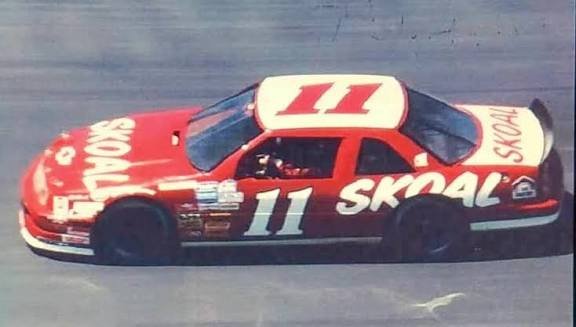
Longtime sponsor Skoal Tobacco re-upped with Ingram for the 1991 season, but by then, the veteran was struggling on the race track, mired in a four-year winless streak. His victory at Hickory on March 15, 1987 turned out to be the last of his career, and though he finished 10th in the 1988 standings and 5th in 1989, he went winless both years. In 1990, he scored just a pair of Top Fives and six Top Tens that year on his way to an 18th-place finish in points. 1991 would become the final year of his illustrious career.
Ingram ran just 12 of the season’s first 22 races and began the year with back-to-back last-place finishes in the second and third races of the season. In the Pontiac 200 at Richmond on February 23, Ingram’s #11 Skoal Chevrolet lost the engine after 27 laps. One week later on March 2, another engine let go after four laps of the Goodwrench 200. These were just the third and fourth last-place finishes of Ingram’s Busch Grand National Series career - all four happened after the start of his winless streak.
On August 3, 1991, Ingram made his 275th and final Busch Grand National Series start in the Kroger 200 at Indianapolis Raceway Park. He started 26th and rallied to finish 9th behind race winner and that season’s champion Bobby Labonte. That day also marked the first recorded DNQ for 1982 and 1983 LASTCAR Busch Grand National Series Champion John Linville.
Ingram left the Busch Grand National Series that night, but still competes in late model races and twice participated in NASCAR’s celebrity races at Bristol, finishing 4th in 2010. He held the record for the most wins in Busch Grand National Series history until Mark Martin surpassed him in 1997, and has been nominated into NASCAR’s Hall of Fame, where one of his #11 cars is on display.
OTHER LASTCAR HEADLINES
A nineteen-year-old Jeff Gordon ran his first full Busch Grand National Series season in 1991, picking up one pole, five Top Fives, and ten Top Tens on his way to an 11th-place finish in the standings. He also scored his first last-place finish at Bristol on April 13 when his #1 Carolina Ford Dealers Ford lost the engine after 22 laps of the Budweiser 250. Bobby Labonte won his first Busch Grand National Series race that day, and he and Gordon battled for Rookie of the Year in the Cup Series just two years later.
“Magic Shoes” Mike McLaughlin competed in his fourth part-time season in the Busch Grand National Series. Following a successful 1990 where he finished in the Top Ten in half of his six starts, McLaughlin ran eight races in 1991 and finished last for the first time at Dover. On June 1 in the Budweiser 200, McLaughlin’s #64 Sunbird Boats Pontiac lost the engine after nine laps. By 1994, McLaughlin became a full-time Busch Grand National Series competitor, and he won the first of his six career races the following season.
Owensboro, Kentucky driver Jeff Green made 14 races in 1991 after a two-race debut the previous season. He finished last for the first time at Orange County Speedway on June 8 when his #86 Sea Ray Mercruiser Chevrolet lost the engine after 7 laps of the Roses Stores 300. Green won the first of sixteen career Busch Grand National Series races in 1997, then put together one of the most dominant championship runs in series history three years later. In the decade that followed, Green would make his own contribution to LASTCAR history as NASCAR’s all-time leader in last-place finishes.
Ricky Craven competed in his fourth season in the NASCAR Busch Grand National Series and, in just seven starts that season, picked up a pair of victories at Oxford and New Hampshire. On October 27, Craven also scored his first last-place finish in the season finale at Martinsville when his #20 SpeeDee Oil Change Chevrolet lost the engine after 19 laps of the Winston Classic. Craven ran three full seasons in Busch, picking up two more victories before becoming Cup Series Rookie of the Year in 1995.
CHAMPIONSHIP STANDINGS
1st) Jim Bown [4 B5s], Ed Ferree [5 B5s], Jack Ingram [6 B5s], Dave Rezendes [4 B5s] (2)
2nd) Troy Beebe, Joe Bessey, Ken Bouchard, Chuck Bown, Frank Bumgarner, Ricky Craven, Cecil Eunice, Harry Gant, Jeff Gordon, Steve Gatz, Kenny Gragg, Jeff Green, Tommy Hitschman, Robert Huffman, Richard Lasater, Mike McLaughlin, Butch Miller, Phil Parsons, Randy Porter, Jeff Purvis, Elton Sawyer, Hut Stricklin, Joe Thurman (1)